
 Save to Pinterest
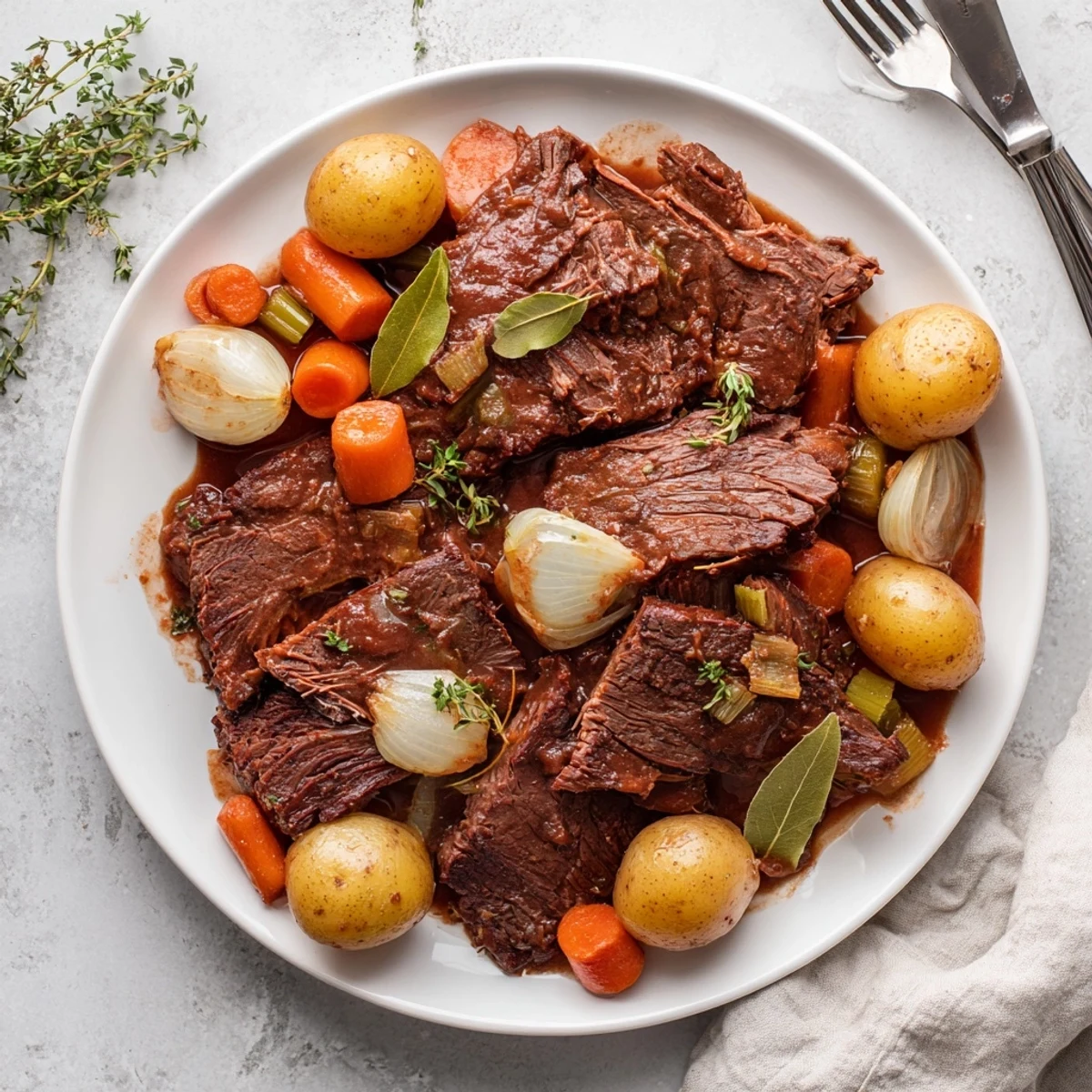
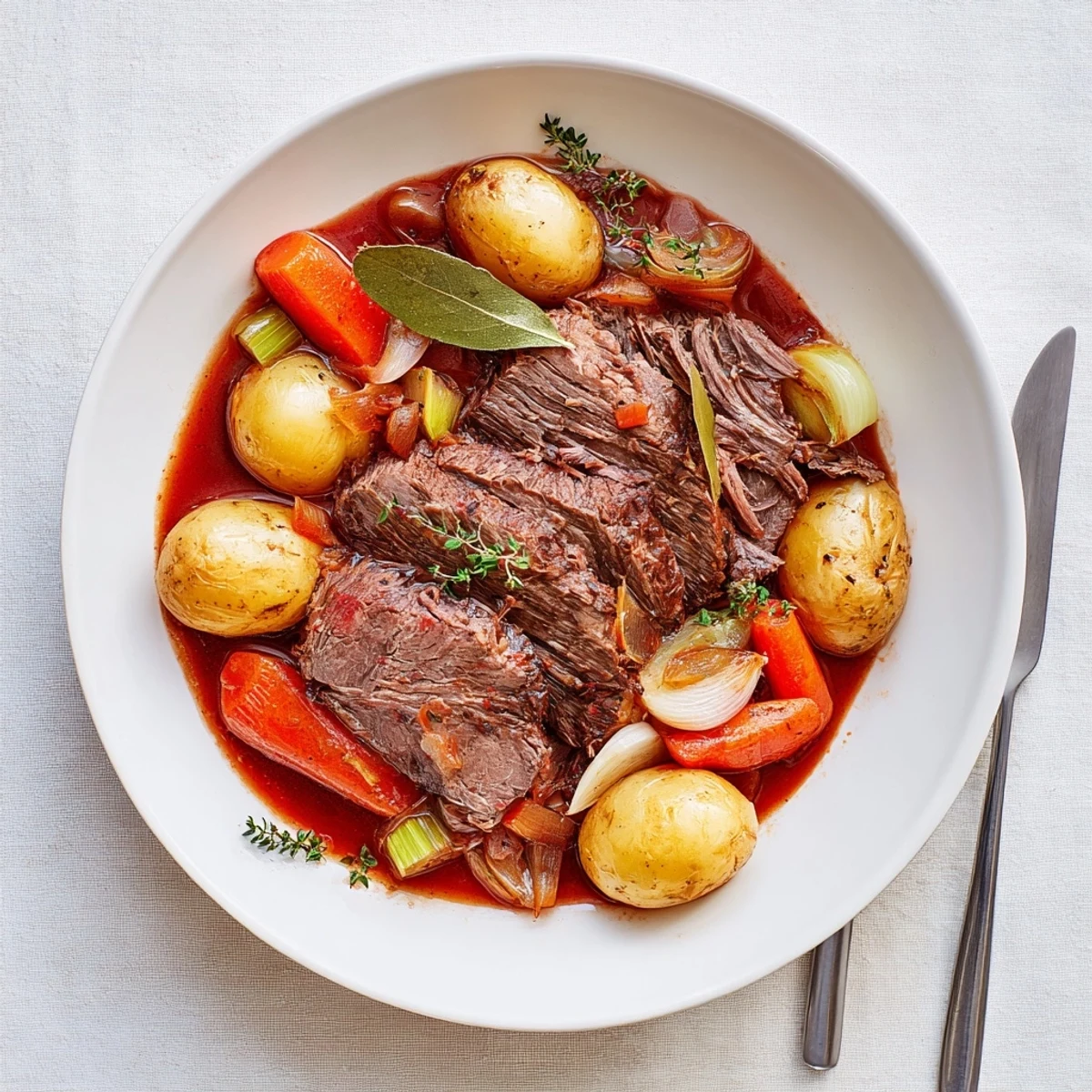
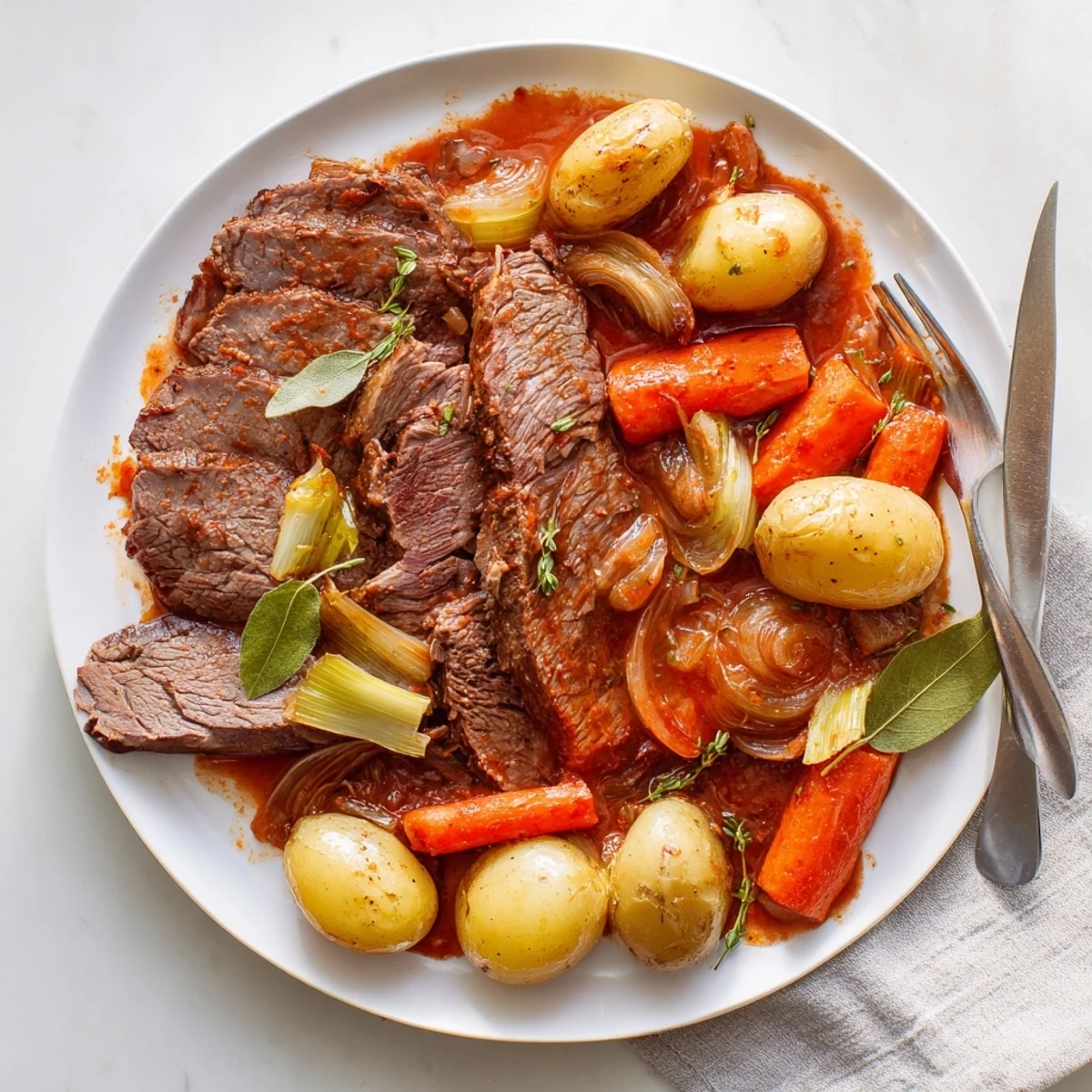
 This classic preparation transforms a humble chuck roast into an exceptional dining experience through slow braising with fresh thyme, rosemary, and aromatics. The meat becomes meltingly tender over three hours, while the braising liquid concentrates into a rich, savory sauce. Onions, carrots, celery, and garlic build a flavorful foundation, enhanced by red wine and tomato paste. The result is hearty comfort food that pairs beautifully with mashed potatoes or polenta.
The house filled with the most incredible smell while this braised away—my neighbor actually knocked on the door to ask what I was making. That's when I knew this recipe was something special.
I made this for my dad's birthday dinner last winter, and he kept saying between bites that it reminded him of Sunday meals at his grandmother's table. Sometimes food connects us to people we miss in the loveliest way.
Ingredients
- Beef chuck roast: This cut has plenty of marbling which keeps the meat juicy through hours of cooking, and it develops incredible flavor as it breaks down
- Kosher salt and black pepper: Generous seasoning before searing creates that beautiful crust and builds layers of flavor throughout
- Yellow onions: They become sweet and meltingly soft, forming the backbone of the braising liquid's flavor
- Carrots and celery: These aromatics deepen the sauce and become tender vegetables to serve alongside the beef
- Garlic: Minced fresh garlic mellows beautifully during braising, adding subtle depth without overpowering
- Olive oil: Essential for getting that gorgeous brown crust on the roast, which adds so much flavor to the final dish
- Beef broth: Use a good quality broth you'd drink on its own—it becomes the body of your sauce
- Dry red wine: Adds acidity and complexity that balances the richness of the beef
- Tomato paste: Concentrated umami that deepens the color and richness of the braising liquid
- Bay leaves, thyme, and rosemary: Classic herbs that infuse the sauce with warm, earthy notes
- Baby potatoes: Optional, but they soak up all that incredible braising liquid and become little flavor bombs
Instructions
- Get your oven ready:
- Preheat to 325°F (165°C) and pat the roast thoroughly dry with paper towels—this helps it brown beautifully instead of steaming
- Season generously:
- Sprinkle salt and pepper all over the meat, pressing it in gently so it adheres well
- Sear to perfection:
- Heat olive oil in your Dutch oven until shimmering, then brown the roast deeply on all sides—about 3 to 4 minutes per side
- Build the flavor base:
- Add onions, carrots, and celery to the pot, cooking until softened and golden, then stir in garlic for just a minute
- Deglaze the pot:
- Stir in the tomato paste, pour in the wine, and scrape up all those browned bits from the bottom—they're pure flavor
- Bring it all together:
- Add the broth, herbs, and return the roast to the pot, tucking potatoes around the sides if you're using them
- Braise slowly:
- Bring everything to a simmer, cover tightly, and transfer to the oven for 3 hours of hands-off magic
- Finish with care:
- Discard the herbs, let the meat rest for 10 minutes, then slice or shred it and serve with those tender vegetables and all that glorious sauce
 Save to Pinterest
 This recipe became my go-to for Sunday suppers after a friend told me she makes it every time she needs to feel comforted. Some dishes just feed more than your hunger.
Getting the Right Cut
Look for a chuck roast with good marbling—those white streaks of fat will render during cooking and keep the meat incredibly moist. I've learned that lean cuts dry out in the oven, while chuck rewards patience with buttery tenderness.
Wine Selection Matters
You don't need an expensive bottle, but use a red wine you'd actually drink—Cabernet Sauvignon or Merlot work beautifully. Once I cooked with a wine I didn't enjoy drinking, and that harshness came right through in the final sauce.
Make It Ahead
This braised roast actually tastes better the next day, which makes it perfect for entertaining. The flavors meld and deepen overnight in the refrigerator, and you can easily spoon off any solidified fat before reheating.
- Cool completely before refrigerating, storing the meat in the sauce to keep it moist
- Reheat gently on the stovetop with a splash of broth if the sauce seems too thick
- The flavors will have developed even more, making it worth the wait
 Save to Pinterest
 There's something deeply satisfying about a dish that rewards patience so generously. Serve it to people you love.
Recipe FAQs
- → What cut of beef works best for braising?
-
Chuck roast is ideal for braising due to its rich marbling and connective tissue. The slow cooking process breaks down these fibers, transforming tough meat into tender, succulent pieces that practically fall apart.
- → Can I prepare this in a slow cooker?
-
Yes, adapt this for a slow cooker by searing the meat first on the stovetop, then transferring everything to the slow cooker. Cook on low for 8-10 hours or high for 4-5 hours until the meat reaches desired tenderness.
- → Why is red wine used in braising?
-
Red wine adds depth, acidity, and complexity to the braising liquid. The alcohol evaporates during cooking, leaving behind concentrated flavors and tannins that complement beef beautifully while helping tenderize the meat.
- → How do I know when the beef is fully braised?
-
The beef is ready when it offers no resistance when pierced with a fork and shreds easily. A fork twisted into the meat should turn without effort. This typically occurs after 3 hours at 325°F.
- → What vegetables pair well with braised beef?
-
Root vegetables like carrots, parsnips, turnips, and baby potatoes hold up well during long braising. They absorb the savory cooking liquid while maintaining their structure, becoming tender but not mushy.