
 Save to Pinterest
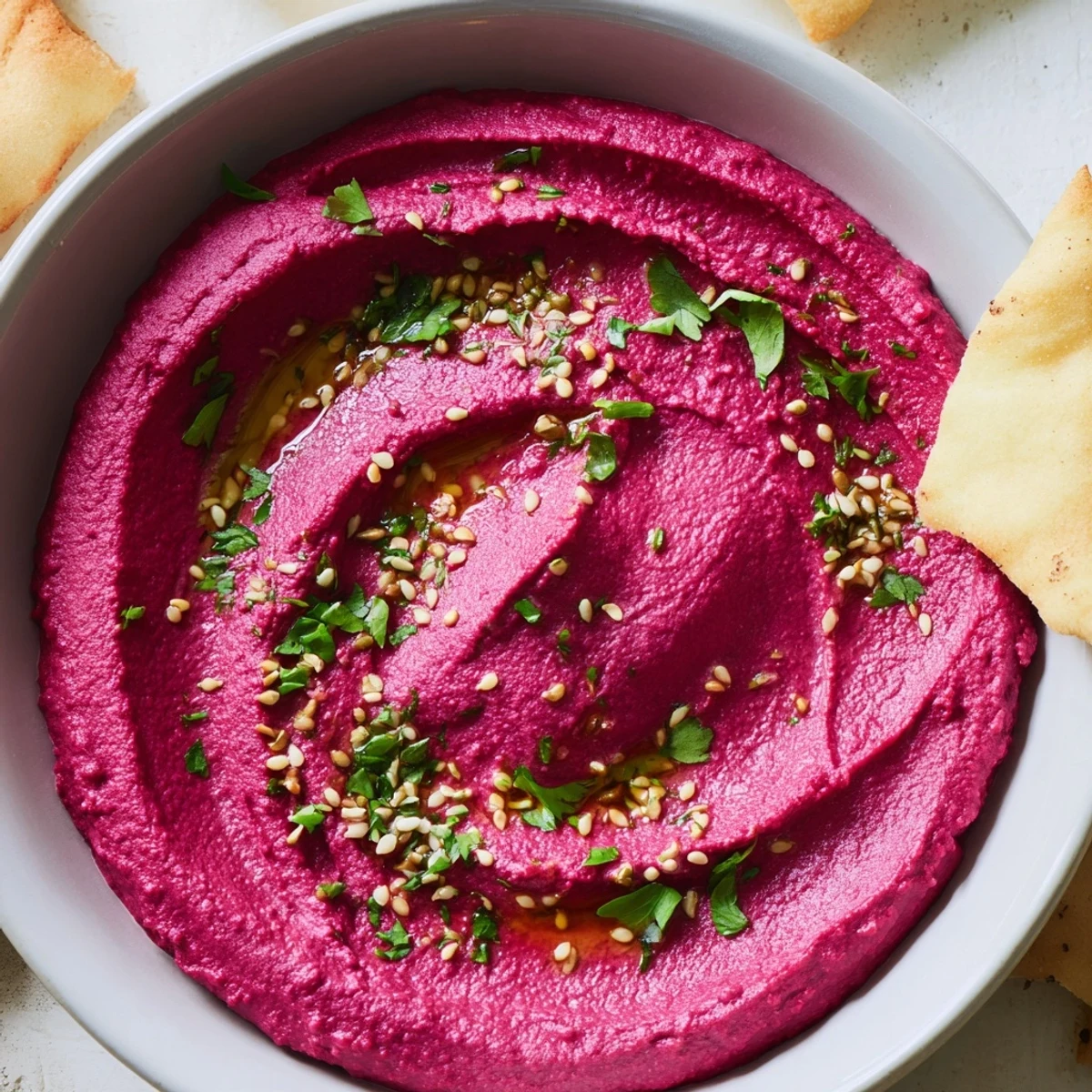
 Create a vibrant spread by roasting beets until tender, then blending them with chickpeas, tahini, lemon, and garlic for a creamy texture. Prepare spiced pita chips by brushing triangles with oil and baking until golden and crisp. Serve the hummus drizzled with olive oil and topped with sesame seeds for a nutritious, eye-catching appetizer.
The first time I made beet hummus, I wasn't planning to—I'd bought a gorgeous ruby beet at the farmers market just because it caught my eye, and suddenly I was wondering what to do with it. My kitchen filled with that earthy, almost sweet smell as it roasted, and by the time I pulsed it into creamy chickpeas and tahini, I knew I'd stumbled onto something special. The color alone made people lean in before they even tasted it.
I made this for a dinner party once and watched my friend's face light up when she saw that hot pink dip—she swore it tasted like I'd spent all day on it. The thing about roasted beet hummus is how it sits quietly impressive on the table, somehow both cozy and show-stopping at the same time. Everyone asked for the recipe that night.
Ingredients
- Medium beet: Choose one that's firm with unblemished skin; the deeper the color, the more vibrant your hummus will be.
- Canned chickpeas: Rinsing them removes the starchy liquid that can make hummus gluey, so don't skip this step.
- Tahini: This is your secret to that silky texture—it's worth buying quality stuff because you really taste it.
- Extra-virgin olive oil: Use the good stuff here; it's one of the few ingredients that won't be cooked down, so its flavor actually matters.
- Lemon juice: Fresh is always better than bottled, and it brightens everything without tasting artificial.
- Garlic clove: One is plenty—hummus isn't a garlic showcase, just a whisper of it beneath everything else.
- Ground cumin: This adds warmth and earthiness that complements the beet perfectly.
- Sea salt: Taste as you go; you can always add more but you can't take it out.
- Cold water: Add it slowly to control the texture—you want it creamy but not soupy.
- Pita breads: Cut them while they're fresh, and the chips will be crispier and less likely to get stale quickly.
- Smoked paprika: Optional but worth it for that subtle smoky depth on the chips.
- Sesame seeds and fresh parsley: Toast the seeds yourself if you can—they taste so much better than pre-toasted ones.
Instructions
- Wrap and roast the beet:
- Wrap your trimmed beet in foil and let it roast at 200°C for 40–45 minutes until it yields easily to a fork. You'll know it's done when a knife slides through without resistance.
- Cool and peel:
- Let it cool just enough to handle, then the skin slips off almost like it's embarrassed to be there. The beet will stain your fingers bright pink, which is half the fun.
- Blend into creaminess:
- Combine the beet, chickpeas, tahini, olive oil, lemon juice, garlic, cumin, and salt in the food processor and blend until it's completely smooth. Add cold water a tablespoon at a time, pulsing between additions, until you hit that perfect creamy texture that still holds its shape on a chip.
- Make the chips:
- While the hummus comes together, arrange your pita triangles on a baking sheet and brush both sides with olive oil. Sprinkle generously with salt and paprika if you're using it, then bake at the same temperature for 8–10 minutes, flipping halfway through, until they're golden and crisp all the way through.
- Plate like you mean it:
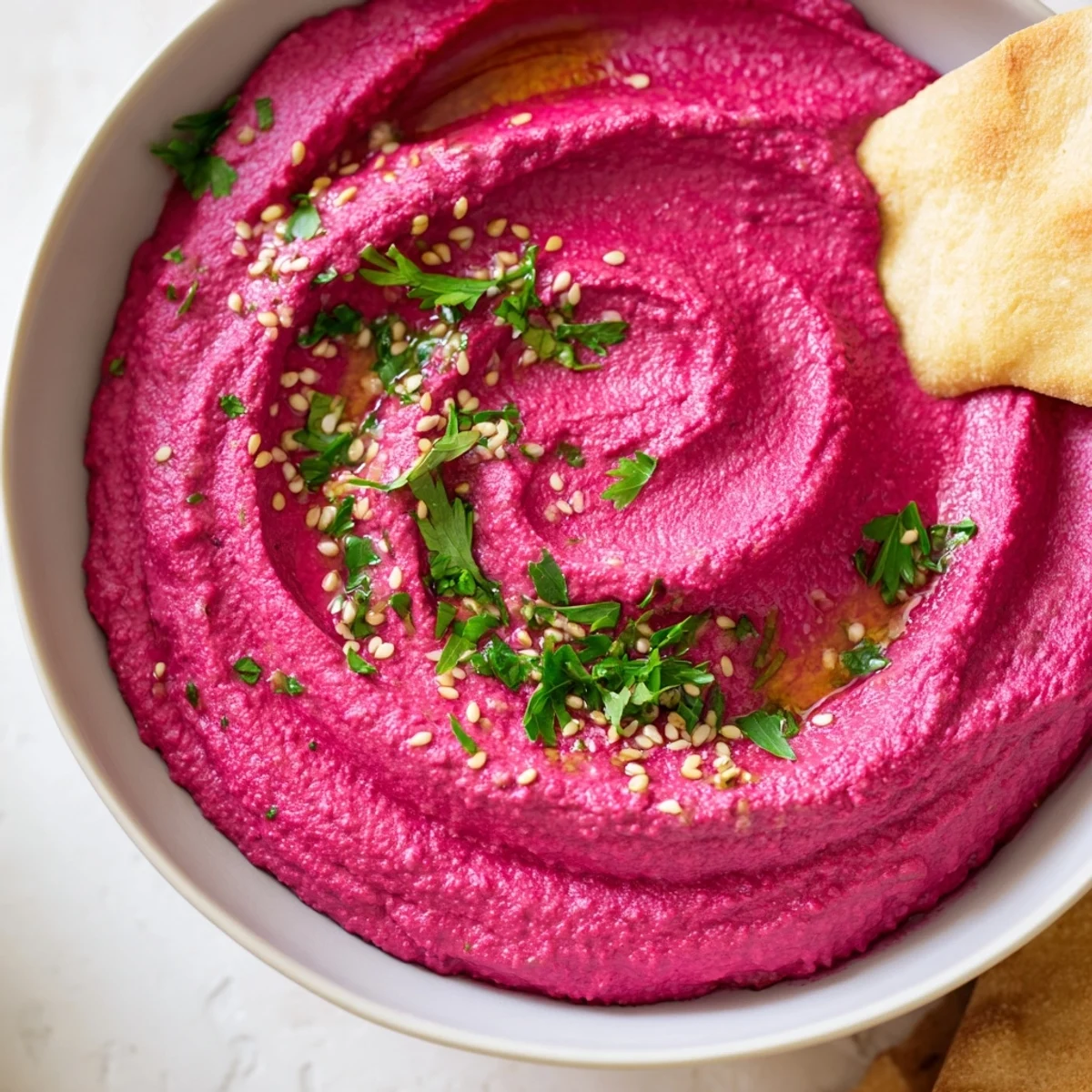
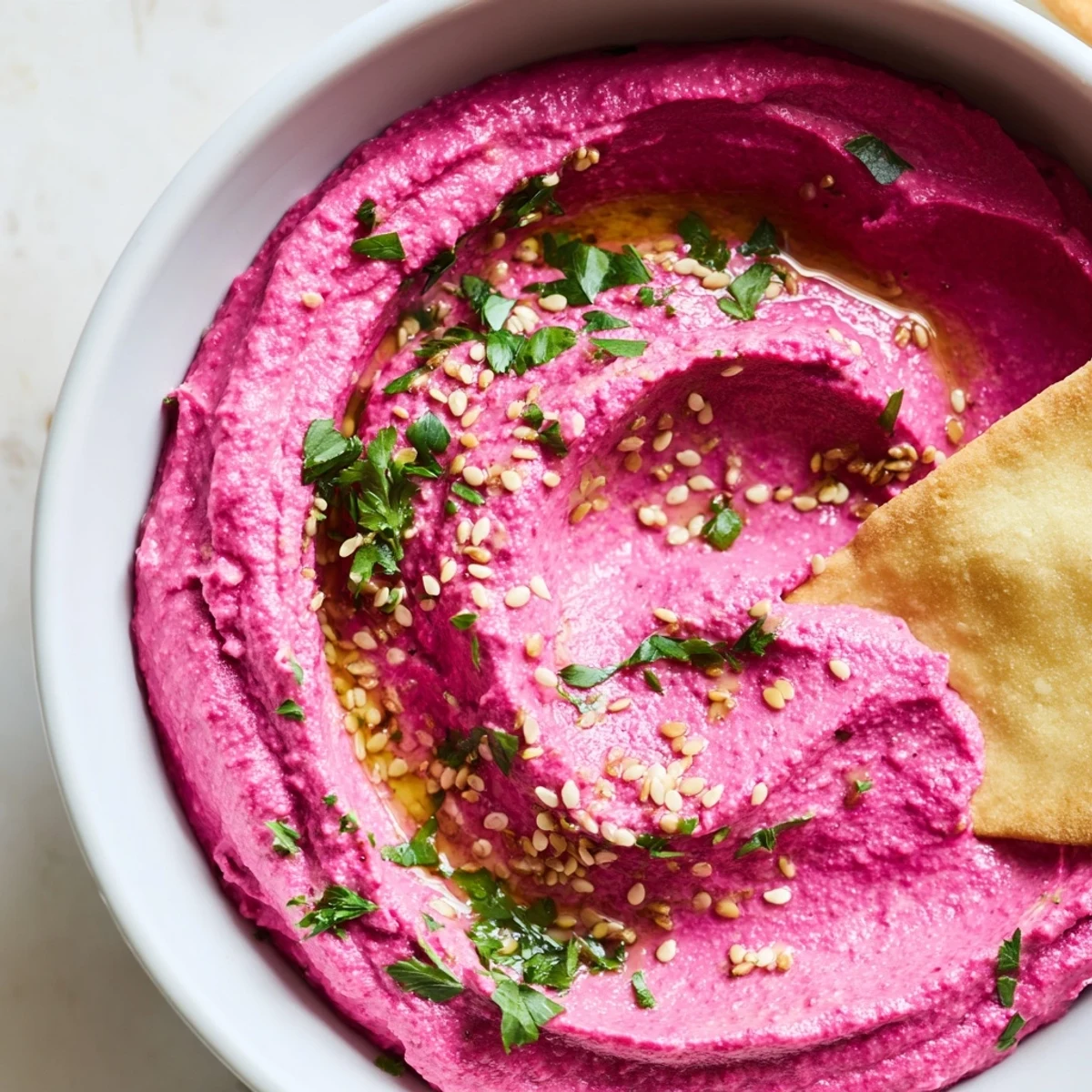
- Transfer the hummus to a bowl and use the back of a spoon to create a gentle swirl on top. Drizzle with olive oil, scatter sesame seeds and parsley over it, and arrange your chips nearby for dunking.
 Save to Pinterest
 There's something almost magical about serving food that's this vibrant—it makes people happy before they even taste it. I love that moment when someone takes the first bite and realizes it's not just beautiful, but genuinely delicious too.
Why Beets Make Everything Better
Beets are one of those ingredients that sounds humble until you roast them and suddenly they're sweet and earthy and almost meaty in a way that makes everything around them taste richer. In hummus specifically, they add natural color and depth without any weird aftertaste like food coloring would. Plus, there's something satisfying about using the whole vegetable instead of just grabbing a can of something from the shelf.
Making It Your Own
The base recipe is really just a starting point—I've made versions with pomegranate molasses added in for brightness, a tiny pinch of cayenne for heat, and once even a splash of pomegranate syrup when I was feeling fancy. If you want to go gluten-free, those pita chips become vegetable chips, and honestly, roasted carrot sticks or crispy kale chips work just as well for scooping. The hummus itself keeps for four days in the fridge, so you can make it ahead if you're bringing it to something.
Small Tricks That Make a Difference
Toast your own sesame seeds in a dry pan for two minutes before garnishing—they'll smell amazing and taste so much fresher than the pre-toasted ones. Let the beet cool completely before peeling or you'll burn your fingers and the skin won't come off as cleanly. When you're blending, taste as you go and don't be shy about adjusting the lemon juice or salt—hummus is very forgiving and responds well to tweaking.
- If the hummus looks too thick, add water one teaspoon at a time rather than dumping in a whole tablespoon.
- Make the pita chips on the same baking sheet as the beet by timing it so they go in after the beet comes out.
- A swirl of olive oil on top isn't just pretty—it keeps the hummus from drying out if it sits for a while.
 Save to Pinterest
 This hummus has become the thing I make when I want to feel like I've done something special without actually working that hard. It's one of those recipes that reminds you that sometimes the simplest things, done well, are exactly what people want to eat.
Recipe FAQs
- → How do I roast the beets?
-
Wrap the trimmed beet in foil and roast at 200°C (400°F) for 40–45 minutes until fork-tender.
- → Can I make this gluten-free?
-
Yes, simply serve the beet hummus with fresh vegetables or gluten-free crackers instead of pita chips.
- → How long does the hummus keep?
-
The hummus can be stored in an airtight container in the refrigerator for up to 4 days.
- → How do I get the smoothest texture?
-
Blend the ingredients thoroughly, adding cold water one tablespoon at a time until you reach the desired consistency.
- → What can I use for garnish?
-
Top the hummus with toasted sesame seeds, chopped fresh parsley, and a generous drizzle of olive oil.