
 Save to Pinterest
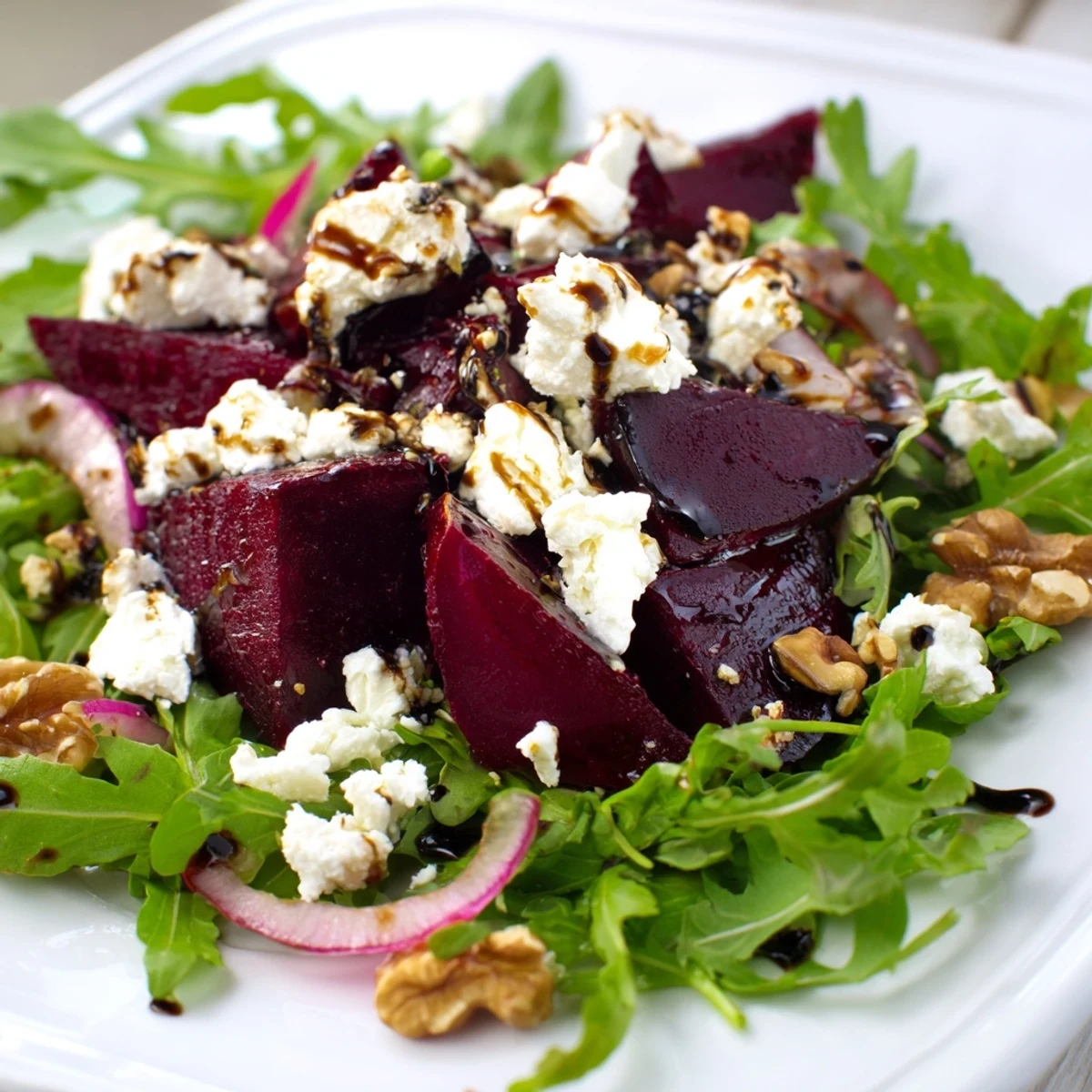
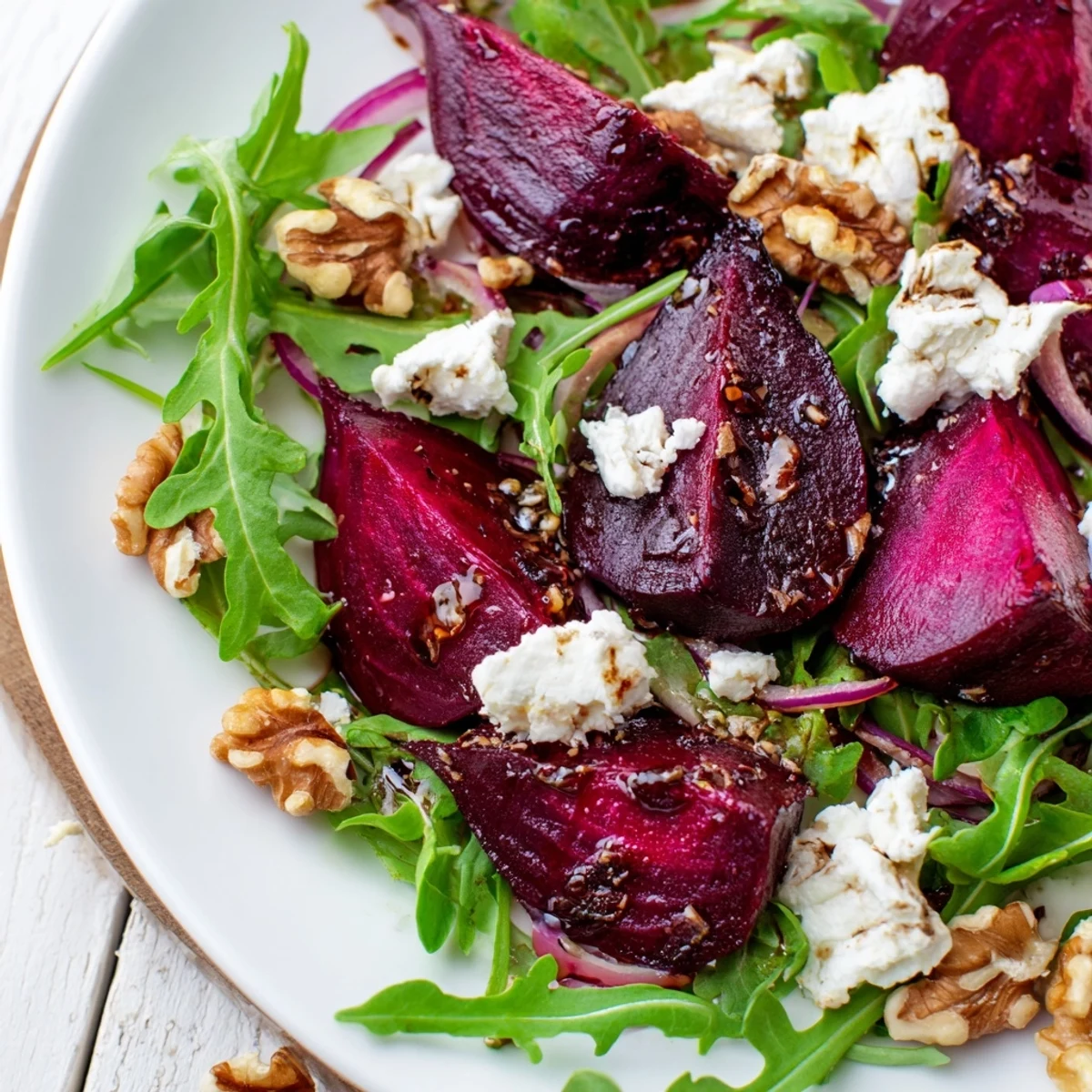
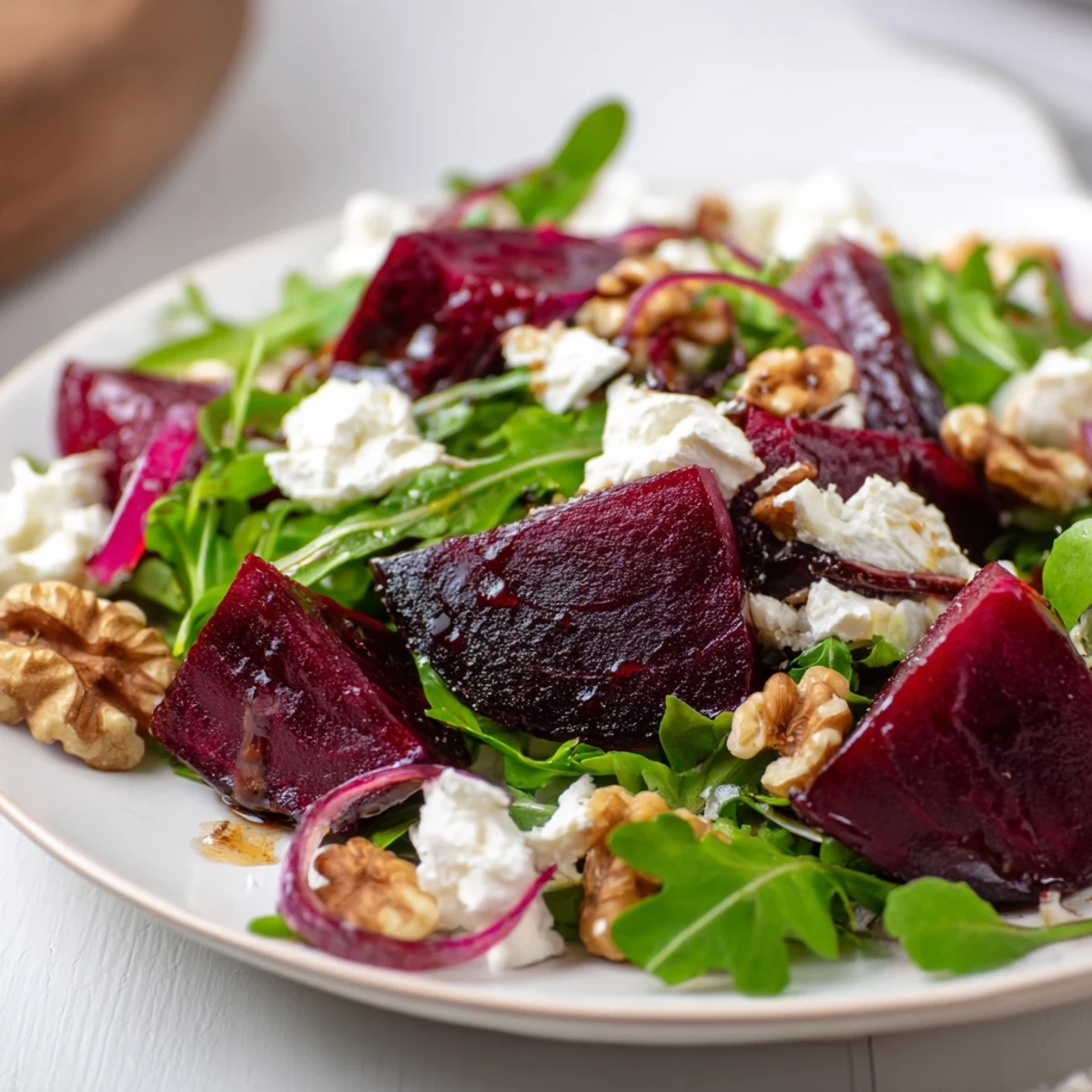
 This dish combines earthy roasted beets with peppery arugula and toasted walnuts for a delightful interplay of textures and flavors. The dressing, made with olive oil, balsamic vinegar, Dijon mustard, and honey, adds a balanced tangy sweetness. Quick to prepare, it suits light meals or starters and can be customized by adding goat cheese or citrus segments for added brightness.
Easy roasting and simple assembly highlight the natural flavors, offering a nourishing and colorful plate that complements modern European tastes.
I discovered this salad on a autumn afternoon when my garden's beet harvest had gotten completely out of hand—I'd pulled up what felt like dozens of the deep purple roots and needed to do something special with them. A friend mentioned she'd tossed warm roasted beets with peppery greens and walnuts, and something about that simple combination stuck with me. The first time I made it, the house filled with this earthy, sweet aroma as the beets caramelized, and I realized how much flavor could come from something so straightforward.
I served this at a dinner party where someone declared they didn't really like beets, then ate three helpings without noticing. Watching their face when I told them what they'd been eating was worth the whole effort of roasting everything.
Ingredients
- Beets: Look for medium ones roughly the size of a golf ball—they roast evenly and peel so easily once they're cool you almost don't need a knife.
- Arugula: Fresh and peppery, it's what makes this salad sing, so don't skip quality here or substitute with milder greens.
- Red onion: The thin slices add a sharp bite that cuts through the sweetness of the beets beautifully.
- Walnuts: Toasting them for just a few minutes transforms them from mild to deeply nutty—it's worth the extra step.
- Goat cheese: Creamy and tangy, it softens slightly from the warm beets and acts like a bridge between all the flavors.
- Extra virgin olive oil: This is your dressing's backbone, so use one you actually enjoy tasting.
- Balsamic vinegar: The slight sweetness in good balsamic vinegar is what makes the whole thing feel balanced rather than sour.
- Dijon mustard: Just a teaspoon acts as an emulsifier and adds complexity without any heat.
- Honey: A touch rounds out the vinegar's sharpness and ties everything together.
Instructions
- Ready your oven:
- Heat it to 400°F and line a baking sheet—this simple step ensures your beets roast evenly and develop that gorgeous caramelized exterior.
- Wrap and roast the beets:
- Tear off sheets of foil, wrap each trimmed beet individually, and arrange them on the sheet. Roast for 35–40 minutes until they yield easily to a fork—the beet skin should practically slip off once they cool.
- Cool and peel:
- Let them rest until you can handle them, then rub the skin away under running water or with a paper towel. Cut them into wedges or bite-sized pieces, whatever appeals to you.
- Toast the walnuts:
- Heat a dry skillet over medium heat and add the walnuts, stirring constantly for 3–4 minutes until they smell incredibly fragrant. Pour them onto a plate right away so they don't burn.
- Whisk the dressing:
- In a small bowl, combine the olive oil, balsamic vinegar, mustard, and honey, whisking until it's emulsified and smooth. Season to taste with salt and pepper.
- Build the salad:
- Dress the arugula with half the vinaigrette and arrange it on a platter or plates, then scatter the warm beets, red onion, walnuts, and cheese on top. Finish with the remaining dressing.
 Save to Pinterest
 There's something almost meditative about watching someone taste this salad for the first time—the way their eyes light up when they realize how the earthiness and sweetness and crunch all exist in perfect harmony. It stopped being just food the moment I understood it could make people happy.
Why Warm Beets Matter
Roasting beets concentrates their natural sugars and makes them sweeter than you'd think possible—it's a complete transformation from the raw root vegetable. The warm beets also soften the peppery intensity of the arugula without crushing its character, which is the whole point of this dish coming together.
Timing and Temperature
Assembling the salad right before serving keeps the arugula crisp and prevents the cheese from melting into an unrecognizable puddle. If you're making this for a crowd, you can roast the beets and prepare the dressing hours ahead, but hold off on arranging everything until the last possible moment.
Variations and Add-Ons
Once you understand how the core flavors work, you can play with this salad confidently. Orange segments brighten it with citrus, feta works beautifully if you don't have goat cheese on hand, and a handful of fresh herbs like dill or mint add unexpected freshness.
- Crumbled feta or ricotta salata can replace the goat cheese for a different texture and flavor profile.
- A pinch of fresh dill or mint scattered over the top adds herbaceous brightness without overwhelming the dish.
- Orange segments or pomegranate arils introduce a citrusy note and beautiful color contrast if you want to dress it up.
 Save to Pinterest
 This salad proves that simple ingredients treated with care can taste extraordinary. Make it once and it becomes one of those dishes you return to again and again.
Recipe FAQs
- → How should beets be roasted for best flavor?
-
Wrap beets individually in foil and roast at 400°F for 35–40 minutes until tender. This brings out their natural sweetness and softens the texture.
- → Can walnuts be toasted for added flavor?
-
Yes, lightly toasting walnuts in a dry skillet over medium heat for 3–4 minutes enhances their crunch and nutty aroma.
- → What is a good substitute for goat cheese?
-
Feta cheese works well as a tangy alternative, or omit cheese entirely for a vegan-friendly option.
- → How can I add a citrus twist to this dish?
-
Adding fresh orange segments provides a bright, juicy contrast that lifts the earthy and nutty flavors.
- → What type of greens pairs best with roasted beets?
-
Peppery arugula complements the sweetness of beets with its slight bitterness, creating a balanced flavor profile.
- → Is this dish suitable for gluten-free diets?
-
Yes, all ingredients are naturally gluten-free, making it safe for gluten-sensitive individuals.