
 Save to Pinterest
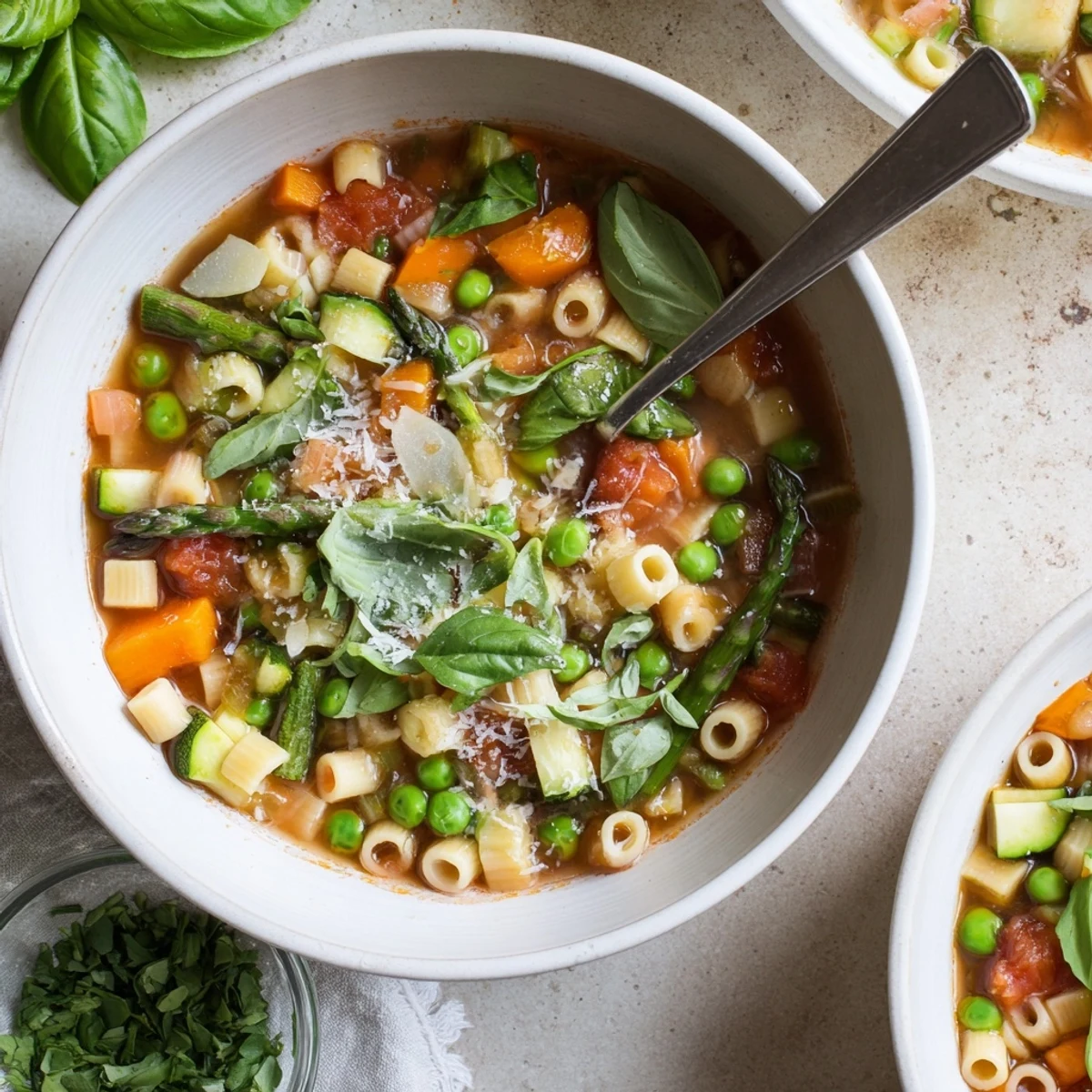
 This hearty spring minestrone celebrates the season's best vegetables—tender asparagus, sweet peas, and crisp zucchini—simmered with small pasta in a fragrant tomato-vegetable broth. Fresh herbs and a squeeze of bright lemon juice elevate the flavors, while optional Parmesan adds a savory finish. Perfect for meal prep, it comes together in under an hour and keeps beautifully for days.
Last April, I found myself at the farmers market staring down a basket of the first tender asparagus of the season. The stall keeper caught me eyeing them and mentioned they would be perfect in a light minestrone, something her grandmother made when spring vegetables started appearing. That conversation sent me home with armfuls of fresh produce and a new tradition born.
My sister came over for lunch last weekend when I had a pot simmering on the stove. She kept hovering around the kitchen, asking what smelled so fresh and green. When I finally ladled out bowls, she took one sip and declared this was the soup she had been searching for since her trip to Florence years ago.
Ingredients
- Olive oil: Creates the foundation for sautéing the vegetables, bringing a subtle richness
- Leek: Adds a milder, sweeter onion flavor that complements spring vegetables perfectly
- Garlic: Provides aromatic depth without overpowering delicate fresh flavors
- Carrots: Bring natural sweetness and beautiful orange color to the broth
- Zucchini: Absorbs the herb flavors while maintaining a pleasant tender texture
- Asparagus: The star spring vegetable that brings grassy notes and vibrant color
- Fresh peas: Add bursts of sweetness and pop against the other ingredients
- Baby spinach: Wilts beautifully into the soup, adding nutrients and deep green color
- Vegetable broth: The liquid foundation, choose a high quality one for best flavor
- Diced tomatoes: Provide body and a subtle tangy undertone without overwhelming
- Small pasta: Ditalini or small shells catch in spoons and make every bite satisfying
- Dried thyme and basil: Layer in earthy herbal notes that bridge all the flavors
- Fresh parsley and basil: Added at the end for bright pops of fresh flavor
- Lemon juice: A crucial finish that brightens the entire soup and highlights spring vegetables
Instructions
- Sauté the aromatics:
- Warm the olive oil in your large pot over medium heat, then add the sliced leek. Cook for about 3 minutes until it softens and becomes fragrant, stirring occasionally to prevent any browning.
- Add the garlic:
- Stir in the minced garlic and let it cook for just 1 minute until you can smell its aroma, being careful not to let it brown or it will turn bitter.
- Build the vegetable base:
- Add the diced carrots and cook for 2 minutes to begin softening, then stir in the zucchini, asparagus pieces, and peas. Continue cooking for another 2 minutes to start developing their flavors.
- Create the soup base:
- Pour in the vegetable broth and the drained diced tomatoes, then increase the heat to bring everything to a gentle boil. The kitchen will start smelling wonderful at this point.
- Cook the pasta:
- Add the small pasta along with the dried thyme and dried basil, then reduce heat to maintain a steady simmer. Cook uncovered for 8 to 10 minutes until the pasta is al dente and the vegetables are tender but still holding their shape.
- Finish with fresh elements:
- Stir in the baby spinach, fresh parsley, fresh basil, and lemon juice. Cook for just 1 to 2 minutes until the spinach wilts and the herbs perfume the steam rising from the pot.
- Season and serve:
- Taste and add salt and pepper as needed, then ladle into warm bowls. Top with grated Parmesan and a generous drizzle of extra virgin olive oil if you like.
 Save to Pinterest
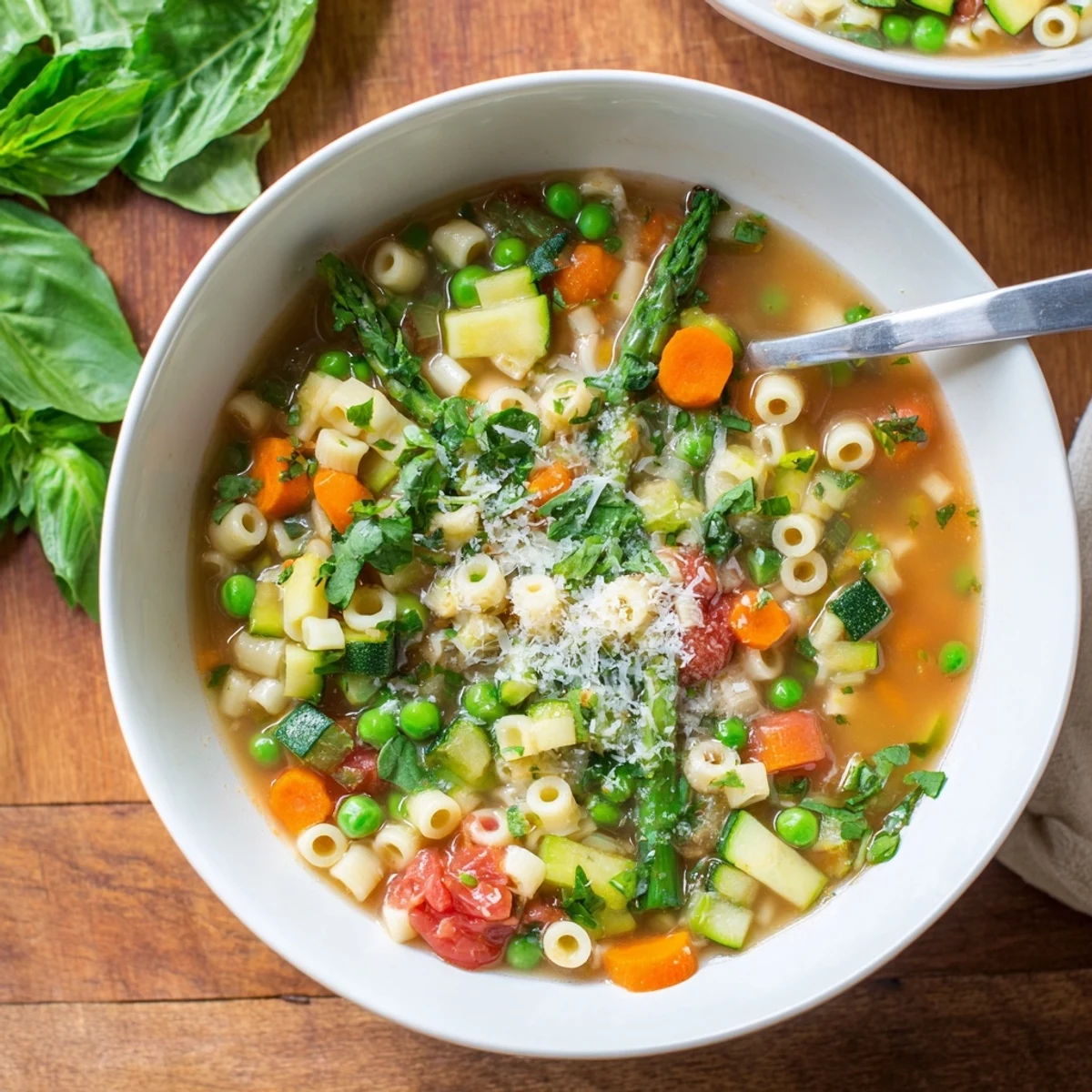
 This soup has become my go to when I want something nourishing that does not feel heavy. Even my neighbor who claims to dislike soup asked for the recipe after smelling it simmering through an open window.
Making It Your Own
Spring vegetables are wonderfully interchangeable in this recipe. Green beans, fava beans, or even young artichoke hearts can step in for whatever looks best at the market. The beauty is in using what is fresh and available.
Perfect Pairings
A crusty baguette or garlic bread is essential for soaking up every drop of the flavorful broth. A simple green salad with a bright vinaigrette complements the soup without competing with its fresh flavors.
Storage and Reheating
The soup keeps beautifully in the refrigerator for up to 3 days, though the pasta will continue soaking up broth. When reheating, add a splash of water or extra broth to return it to the desired consistency.
- Freeze individual portions without the pasta for best results
- Add fresh pasta when reheating frozen portions
- The flavors actually deepen and improve after a day
 Save to Pinterest
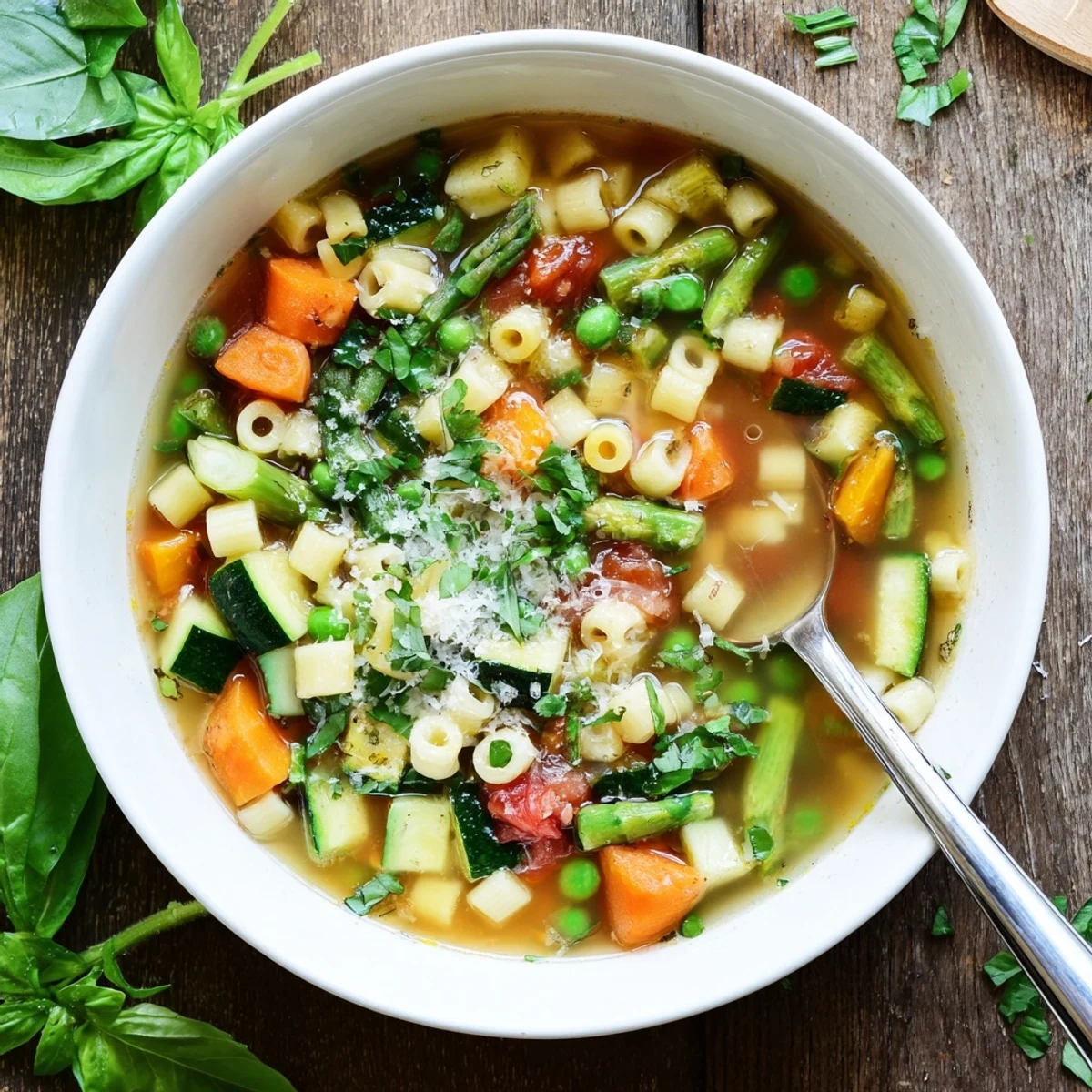
 There is something deeply comforting about a bowl of soup that tastes like the season itself. Hope this brings a little spring to your table.
Recipe FAQs
- → What vegetables work best in spring minestrone?
-
Asparagus, peas, zucchini, leeks, and carrots are classic choices. You can also add green beans, fava beans, or artichoke hearts based on availability and preference.
- → How do I prevent the pasta from getting mushy?
-
Cook the pasta directly in the broth until al dente, then serve immediately. If storing leftovers, the pasta will absorb liquid—simply add more broth when reheating to restore the consistency.
- → Can I make this soup gluten-free?
-
Yes, simply substitute the regular pasta with your favorite gluten-free variety. All other ingredients are naturally gluten-free, making this an adaptable dish for various dietary needs.
- → How long does spring minestrone keep in the refrigerator?
-
Leftovers store well for up to 3 days in an airtight container. The flavors often deepen over time, making it an excellent make-ahead option for busy weeks.
- → What's the purpose of lemon juice in this soup?
-
Fresh lemon juice brightens the flavors and balances the richness of the vegetables and olive oil. It adds a subtle acidity that makes all the other ingredients taste more vibrant.
- → Can I freeze spring minestrone?
-
While possible, freezing may affect the pasta texture. For best results, freeze the vegetable broth base without pasta, then cook fresh pasta when reheating.