
 Save to Pinterest
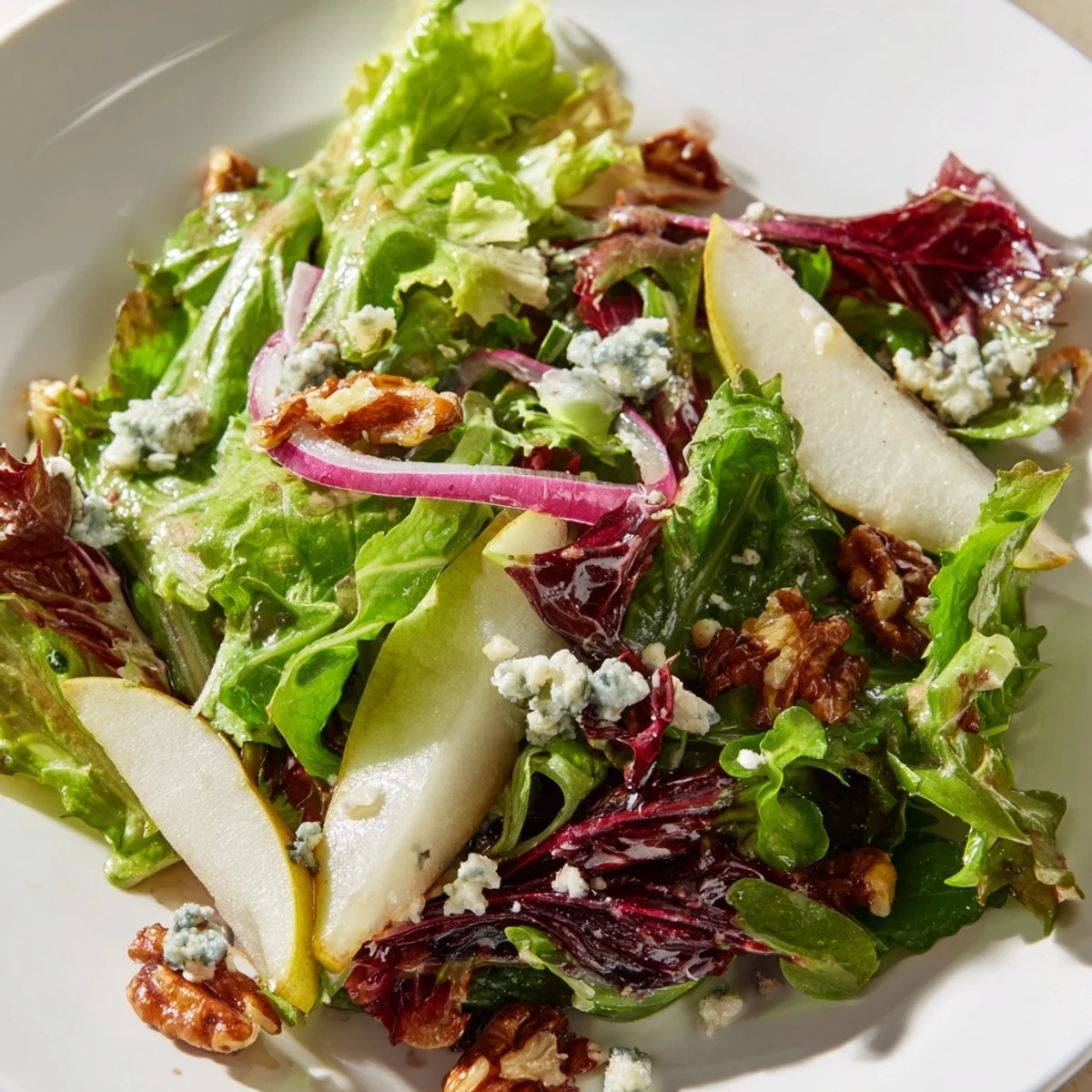
 This dish highlights the fresh, earthy flavors of winter greens complemented by the sweetness of ripe pears and the satisfying crunch of candied walnuts. A tangy vinaigrette brings a bright contrast, enhancing each bite with a balance of acidity and sweetness. The candied walnuts add texture and a subtle caramelized note, elevating the overall taste. Ideal for a light lunch or an elegant starter, this vibrant combination comes together quickly with simple techniques that preserve freshness and natural flavors.
There's something about the sharp snap of winter greens against the sweetness of a just-ripe pear that made me fall in love with this salad on a gray January afternoon. I was reaching for lunch and found myself drawn to what looked like forgotten ingredients in my crisper drawer, but somehow they came together into something I couldn't stop eating. The candied walnuts were an accident born from leftover ingredients and a craving for texture, and now I make them every time. It became the kind of simple salad that feels both comforting and celebratory at once.
I made this for my sister when she visited and was skeptical about eating salad in the middle of winter. She had thirds, which says everything. That moment when someone tries your food and their whole expression changes, that's what this salad does every single time.
Ingredients
- Mixed winter greens: Choose whatever looks freshest, arugula and frisée together give you peppery depth, while spinach softens the bite.
- Ripe pears: Slice them just before assembly so they don't turn brown, and a barely soft pear is better than a crisp one here because it releases more juice into the vinaigrette.
- Blue or goat cheese: Either works, but goat cheese crumbles cleaner if you chill it first.
- Red onion: Paper thin, almost translucent, or it overpowers everything else.
- Walnut halves: Toasting them in sugar happens fast, so stay right there and don't walk away.
- Extra-virgin olive oil: The vinaigrette lives or dies on this, so use something you'd actually taste on bread.
- Apple cider vinegar: The subtle sweetness is what makes this different from any other vinaigrette.
- Dijon mustard: Just enough to emulsify and add a gentle tang.
- Honey: Rounds out the sharpness and adds body to the dressing.
Instructions
- Toast the walnuts in their glaze:
- In a nonstick skillet over medium heat, combine walnuts, sugar, and butter, stirring constantly. Watch as the sugar begins to melt and caramelize around each piece, about 3 to 4 minutes of constant movement. The moment it all turns a light amber and smells like caramel, sprinkle with salt and pour it all onto parchment paper immediately so it doesn't burn on the hot pan.
- Build your vinaigrette:
- Whisk olive oil, apple cider vinegar, Dijon mustard, honey, salt, and pepper in a small bowl until the honey dissolves completely and everything looks emulsified. Taste it straight and adjust the salt or vinegar to your preference before it touches the greens.
- Dress the greens gently:
- In a large bowl, toss the winter greens with half the vinaigrette, using your hands if you need to, until every leaf glistens. Spread them on a platter or divide among plates, leaving room for the toppings.
- Top it right before eating:
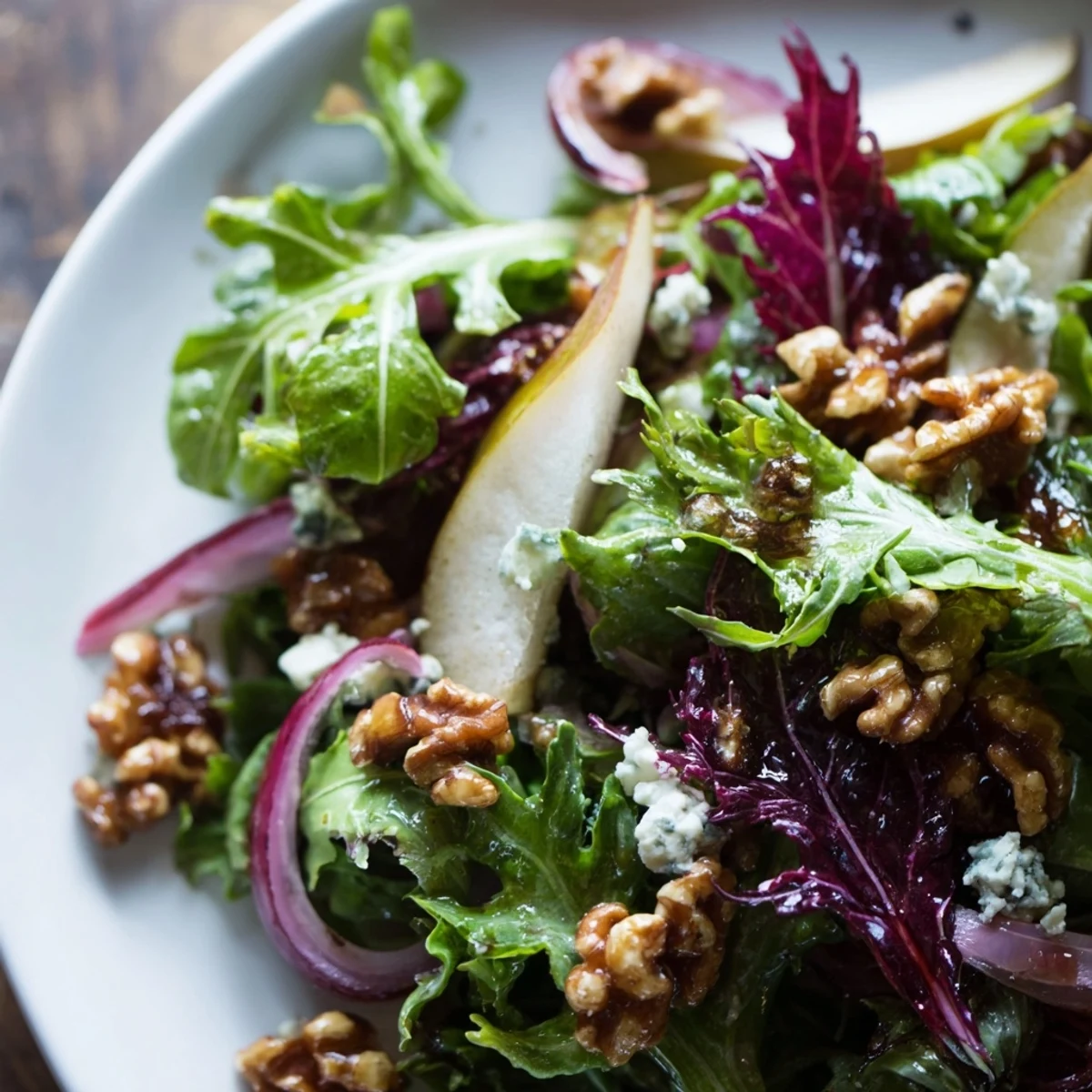
- Arrange sliced pears, thin red onion, crumbled cheese, and those walnuts over the greens in whatever way looks good to you. Drizzle the remaining vinaigrette over everything just before serving so nothing gets soggy.
 Save to Pinterest
 This became the salad I made when I wanted to show someone I cared but didn't want to spend all day cooking. It's somehow both a weeknight lunch and something fancy enough for when people were coming over, which made it feel like a quiet kind of magic.
The Secret of Pear Timing
Pears are temperamental fruit. Too early and they're mealy, too late and they're mushy, and there's this tiny window where they're actually perfect. I learned to buy them a day or two before I plan to make this, leave them on the counter in a brown paper bag, and slice them at the last possible moment. The vinaigrette will soften them just slightly as you eat, which is exactly what you want.
Why Apple Cider Vinegar Changes Everything
Most vinaigrettes are sharp and austere, which is fine if you want to be made to feel something. Apple cider vinegar is different. It has this subtle sweetness that feels warm rather than aggressive, and it complements winter greens without bullying them. Once you taste the difference, it's hard to go back to regular vinegar for this particular salad.
Variations That Work
This salad is flexible in the way that the best recipes are. I've added pomegranate seeds for color and tartness, used candied pecans instead of walnuts when that's what I had, and even swapped in fresh figs when pears weren't in season. The structure stays the same but the feeling changes with whatever fruit and cheese you choose.
- Pomegranate seeds add both tartness and visual drama.
- Candied pecans work equally well if you have them on hand.
- Try a sharp aged white cheddar instead of blue cheese for a completely different flavor.
 Save to Pinterest
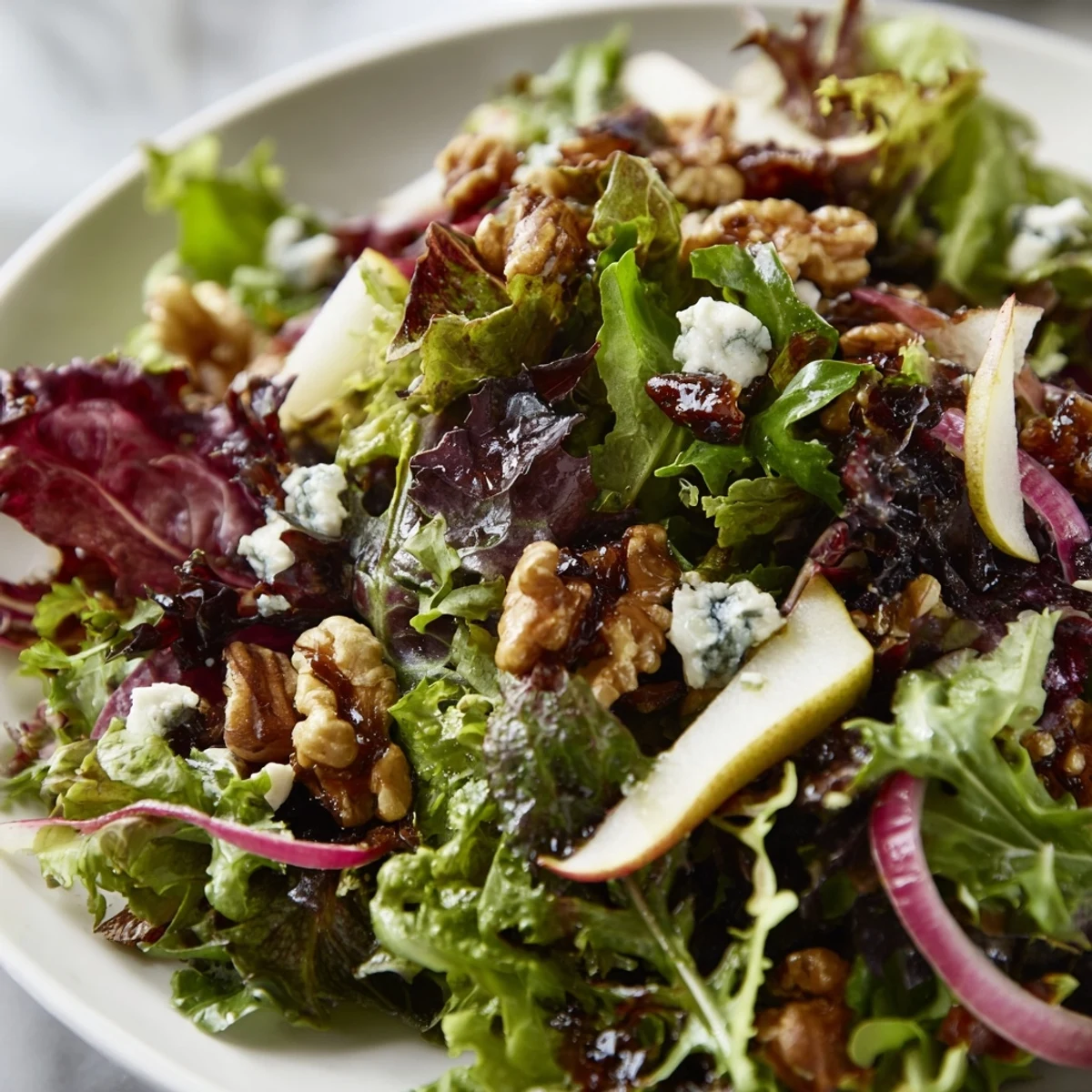
 This is the salad that reminded me that sometimes the simplest combinations are the ones worth remembering. It's become the one I make when I want to feel like I'm taking care of myself, or when I want to show someone that I know how to listen to what's in season.
Recipe FAQs
- → How do I make perfectly candied walnuts?
-
Heat walnuts with sugar and butter in a skillet over medium heat, stirring constantly until the sugar melts and coats the nuts evenly. Remove promptly to cool on parchment.
- → Can I substitute the pears with another fruit?
-
Yes, apples work well as a substitute, providing a similar sweetness and crisp texture that complements the greens and walnuts.
- → What type of cheese pairs best with this salad?
-
Crumbled blue cheese or goat cheese adds a creamy tang that balances the sweetness of the pear and walnuts.
- → How should the vinaigrette be prepared for best flavor?
-
Whisk together olive oil, apple cider vinegar, Dijon mustard, and honey until emulsified, seasoning with salt and pepper to taste for a bright, tangy dressing.
- → Is there a way to make this suitable for a vegan diet?
-
Omit the cheese or use a plant-based alternative, and replace honey with maple syrup to maintain sweetness while keeping it vegan-friendly.