
 Save to Pinterest
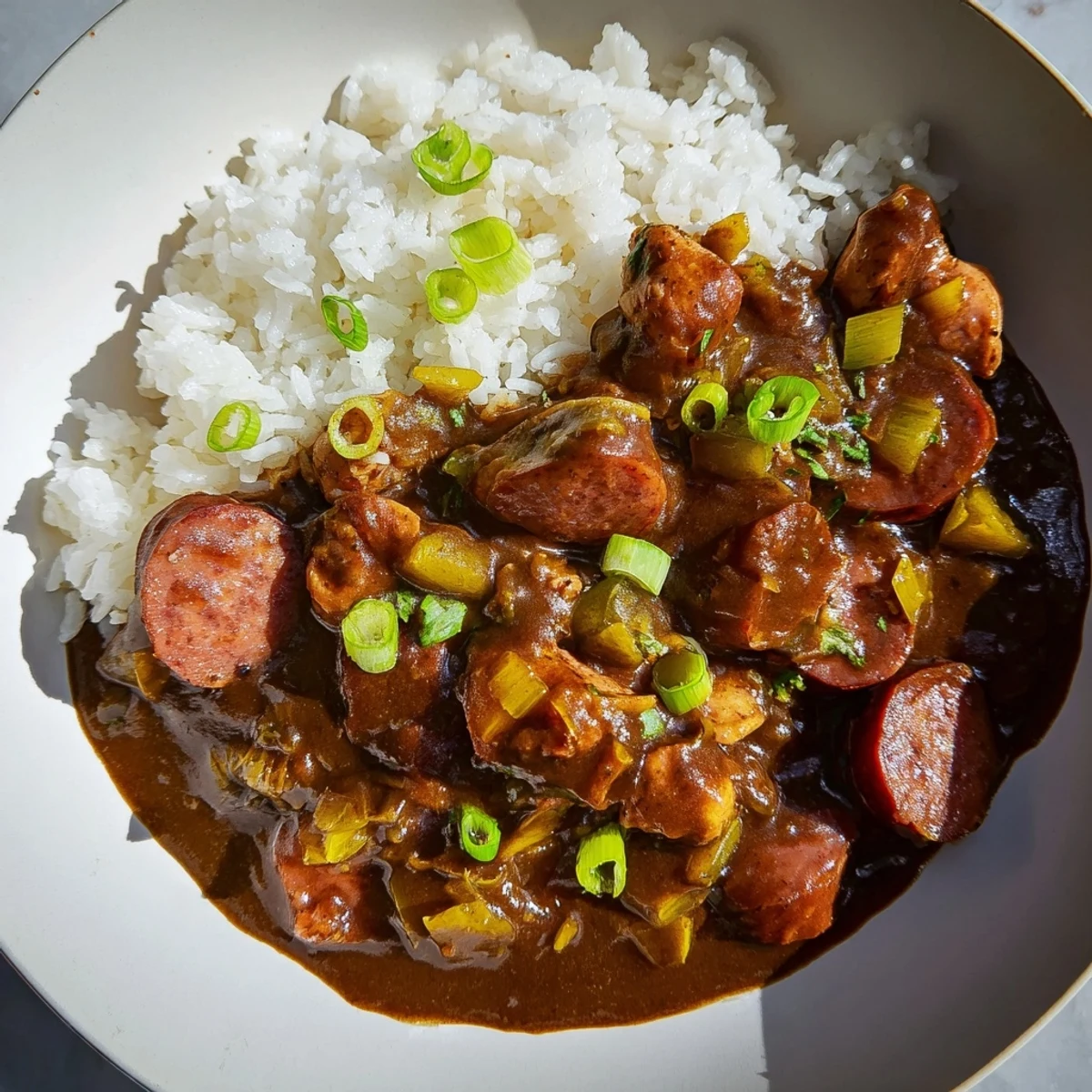
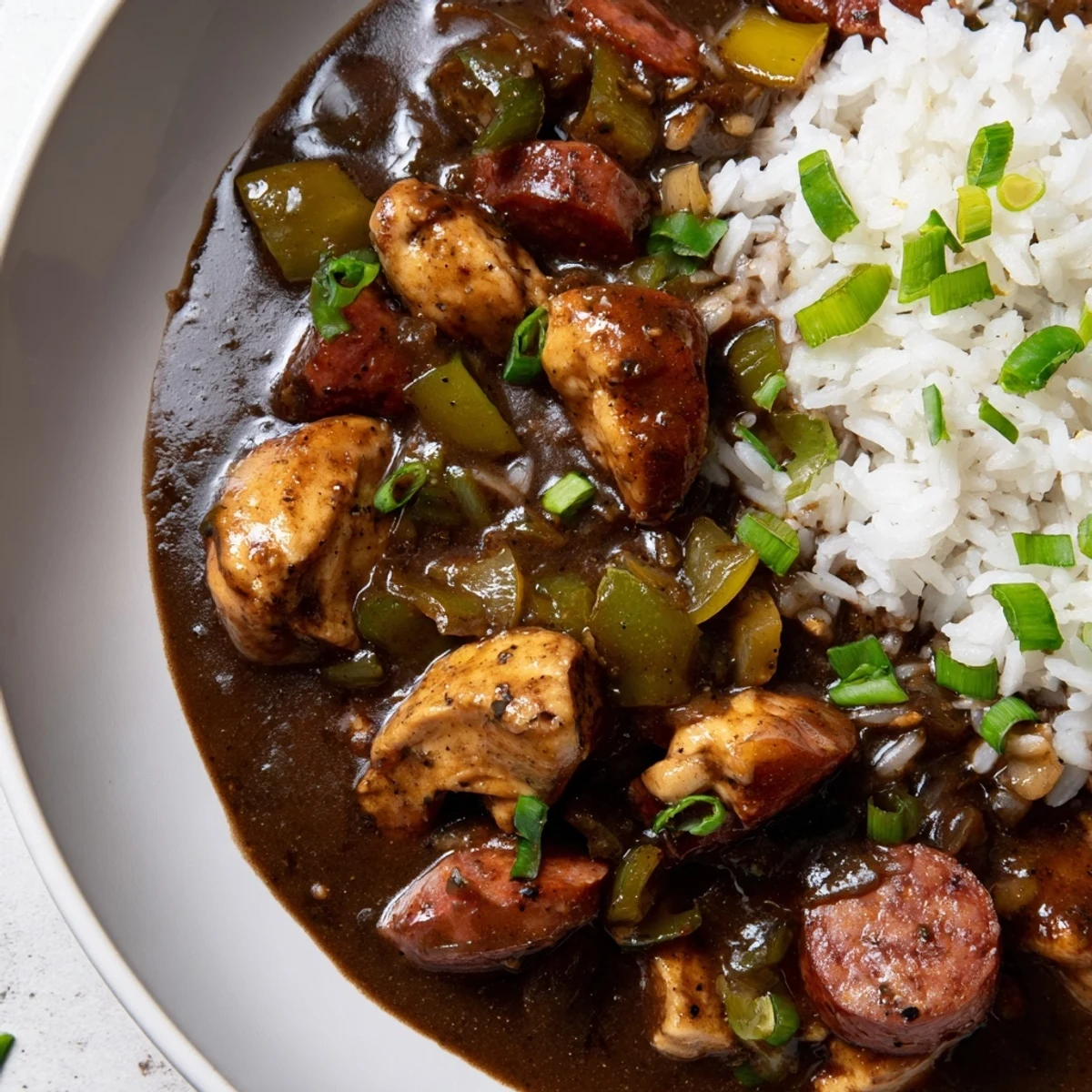
 This festive dish blends tender chicken thighs and smoky andouille sausage in a deeply browned roux, simmered with onions, bell peppers, celery, and garlic—the classic 'holy trinity'—creating rich layers of flavor. The stew is seasoned with thyme, smoked paprika, cayenne, and bay leaves, offering warmth and authenticity. Served over white rice and garnished with scallions and parsley, it embodies Creole comfort with a robust, soulful taste perfect for any occasion.
The roux stirred in my pot for twenty minutes that first time, my arm aching but determined not to look away. My neighbor Miss Ruby had warned me that gumbo demands patience, that the difference between a good roux and a burnt one is just thirty seconds. When it finally turned that perfect mahogany shade, I understood why this dish represents Louisiana soul.
I brought this to a Super Bowl party years ago and watched people go back for third and fourth helpings. My friend Tony who grew up in New Orleans took one spoonful, closed his eyes, and said this tasted like his grandmothers kitchen. That moment made every minute of stirring worth it.
Ingredients
- Chicken thighs: Dark meat stays tender during long simmering and contributes richness to the broth.
- Andouille sausage: This smoked Cajun sausage provides the essential smoky backbone that defines authentic gumbo.
- Vegetable oil: Neutral oil allows the flour to toast without competing flavors.
- All-purpose flour: Forms the classic roux foundation that thickens and deepens the entire dish.
- The holy trinity: Onion, bell pepper, and celery are the non-negotiable aromatic base of Creole cooking.
- Garlic: Adds that fragrant kick that rounds out the vegetable base.
- Chicken stock: Low-sodium lets you control the seasoning while providing essential body.
- Smoked paprika and cayenne: Layer smoky heat with bright spiciness for complex warmth.
- Dried thyme and bay leaves: Herbal notes that meld beautifully during the long simmer.
- Filé powder: Ground sassafras leaves offer an authentic earthy finish and natural thickening.
Instructions
- Making the Roux:
- Heat the oil in a heavy-bottomed pot over medium heat. Gradually whisk in the flour and stir constantly for 15 to 20 minutes until the roux reaches a deep chocolate brown color, adjusting heat as needed to prevent burning.
- Building the Base:
- Add the onion, bell pepper, and celery to the roux. Sauté for 5 minutes until the vegetables soften and begin to release their aromas.
- Adding Aromatics:
- Stir in the garlic and cook for 1 minute until fragrant. Be careful not to let it scorch.
- Browning the Meats:
- Add the sausage slices and cook for 3 to 4 minutes, allowing them to brown slightly and release their smoky oils. Add the chicken pieces and season with salt, black pepper, paprika, cayenne, thyme, and bay leaves. Stir well to coat everything.
- Simmering to Perfection:
- Slowly pour in the chicken stock while stirring constantly to prevent lumps. Bring to a boil, then reduce heat to low and simmer uncovered for 45 to 60 minutes, stirring occasionally to prevent sticking.
- Final Seasoning:
- Taste the gumbo and adjust seasoning as needed. If using filé powder, stir it in just before serving to thicken and add its distinctive flavor. Discard the bay leaves before serving.
- Serving:
- Serve the gumbo hot over cooked white rice. Garnish generously with sliced scallions and fresh parsley for color and freshness.
 Save to Pinterest
 My daughter helped me make this for her Louisiana history class presentation and received an A plus. The teacher said she could practically smell Bourbon Street just reading about the cooking process.
The Art of Patience
Gumbo teaches you that some things cannot be rushed. That roux requires your full attention and a willingness to stand at the stove without distraction. I have learned to put on music and settle into the rhythm of stirring, treating those twenty minutes as meditation rather than a chore.
Rice Rituals
The perfect gumbo rice should be slightly sticky so it clings to the spoon but each grain remains distinct. I rinse my rice until the water runs clear before cooking to remove excess starch. Many Louisiana cooks season their rice water with a pinch of salt and sometimes a dab of butter for extra richness.
Make It Your Own
Once you have mastered the classic version, gumbo welcomes endless variations. I have added okra in summer when it is fresh and plentiful. Some cooks swear by adding crab or shrimp during the last ten minutes of cooking.
- Start your roux over medium-high heat then reduce to medium as it darkens.
- Leftover gumbo keeps for up to five days in the refrigerator and freezes for months.
- Always reheat gently to prevent separating the roux.
 Save to Pinterest
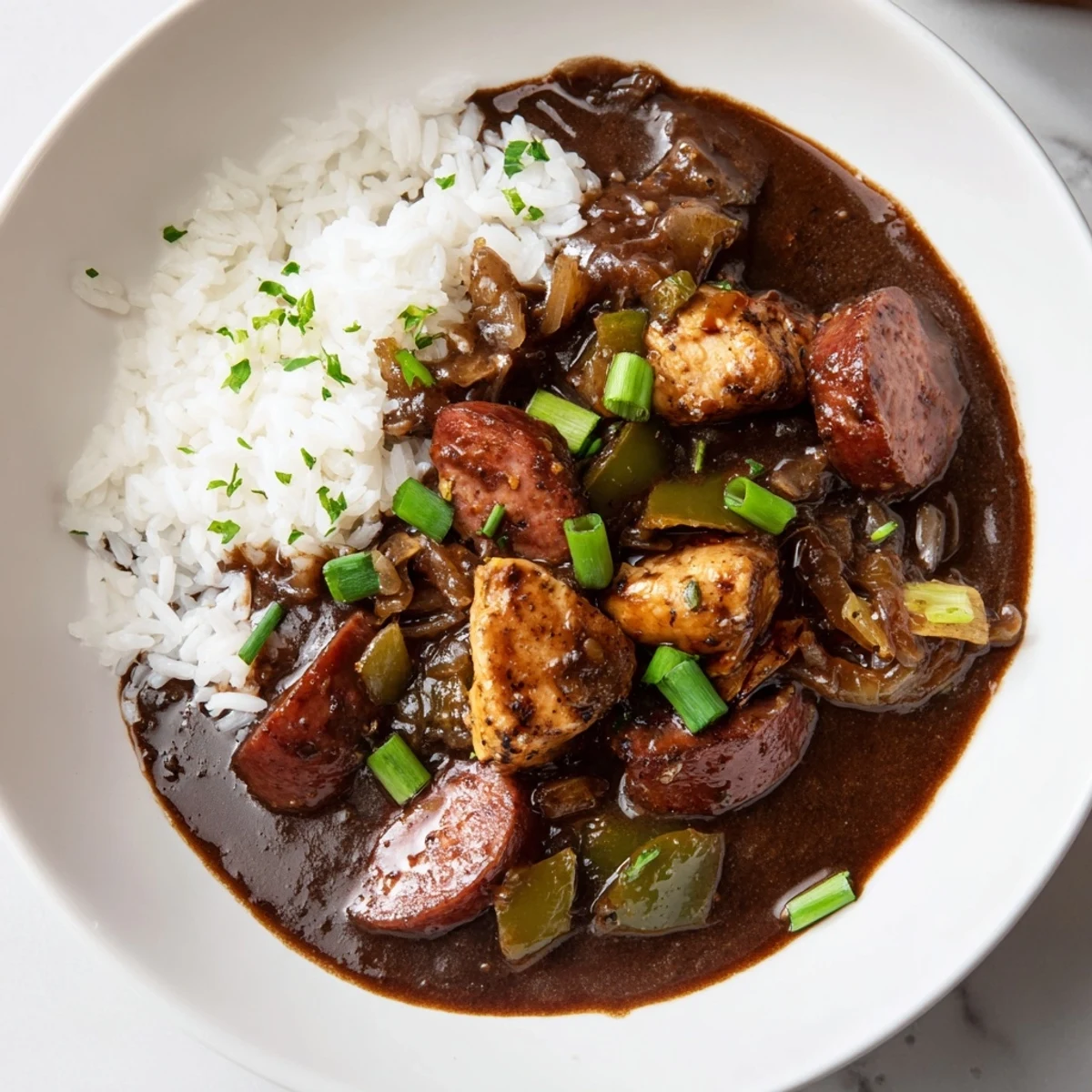
 A bowl of gumbo is more than dinner, it is a story in a spoon. Laissez les bons temps rouler.
Recipe FAQs
- → What is the 'roux' used in this dish?
-
The roux is a mixture of vegetable oil and flour cooked until deep chocolate brown, forming the rich base that thickens and flavors the stew.
- → Can I substitute the chicken with other meats?
-
Yes, smoked turkey or tasso ham can add extra depth; shrimp can be added near the end for a seafood variation.
- → How long should the stew simmer for best flavor?
-
Simmer uncovered for 45–60 minutes, allowing flavors to meld and the chicken to become tender.
- → What does the 'holy trinity' refer to in this context?
-
It refers to the diced onions, bell peppers, and celery sautéed at the beginning to build the foundational flavor.
- → Is the filé powder necessary?
-
Filé powder is optional but adds authentic Creole flavor and helps thicken the stew when stirred in near the end.